
Calling People In, Not Out: Practical Strategies for Facilitators
posted on: agosto 4, 2026
category: Microlearning
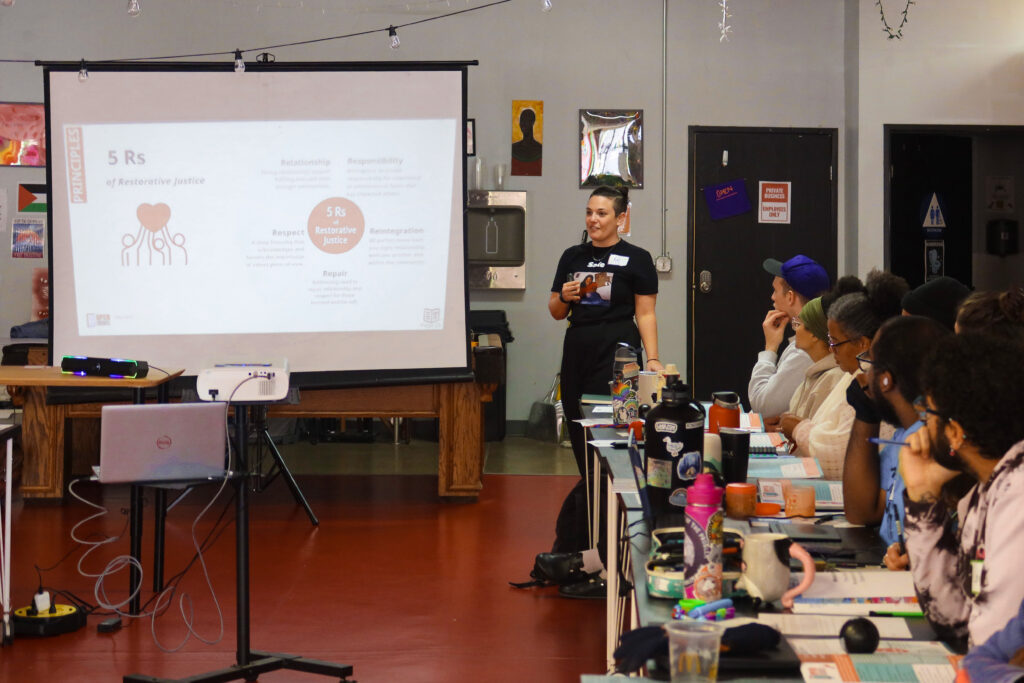
As our youth facilitators-in-training (FiTs) begin their journey toward becoming Open Doors facilitators, one important distinction we emphasize early is the difference between being a «teacher» or «trainer» versus being a facilitator.
Facilitators are not there simply to deliver information or manage a classroom. They create space for conversation, invite participants to share their expertise, and help the group learn from one another.
That distinction is the driving force behind the Facilitator Microlessons included in each of our skills labs. Through realistic scenarios and common facilitation challenges, FITs develop practical strategies and language they can use in the training space.
The first microlesson for our current cohort focused on calling people in, rather than calling them out.
«Calling people in» means responding to challenges in a way that preserves dignity, strengthens connection, and encourages participation. It also requires facilitators to remain curious and avoid overmanaging the room.
FiTs reflected on three common scenarios. Here are some of the strategies they identified.
1. How can you invite participation without calling on someone directly?
Calling on a specific person can sometimes put them on the spot.
Instead, facilitators can create several ways for participants to contribute:
- Remind the group that everyone’s perspective has value, even when someone’s thought feels small or unfinished.
- Offer a gentle invitation, such as: “I noticed you’re deep in thought. What’s on your mind?”
- Invite a section of the room rather than one person: “I’d love to hear from this table or this side of the room.”
- Create a “parking lot,» which is a poster or shared space where participants can add ideas or questions without speaking in front of the full group.
- Connect with participants one-on-one during a break. The conversation does not need to be about the training content; sometimes a simple moment of connection can help someone feel more comfortable participating later.
2. How can you encourage engagement from a quiet group?
A quiet room does not necessarily mean participants are disengaged. People process information and participate in different ways.
Facilitators can offer multiple entry points for discussion by:
- Beginning the day with an interactive icebreaker or energizer.
- Creating smaller groups or pairs when possible, which may feel more comfortable than speaking to the full room.
- Revisiting the group’s community agreements. Did the group include engagement or presence? What do those ideas look like to the people in the room?
- Shifting away from a lecture-style approach by adding reflective questions, activities, or small-group conversations.
3. How can you address side conversations without calling people out?
Side conversations can be distracting, but publicly correcting participants may create embarrassment or tension.
Before addressing individuals directly, facilitators can try to reground the room by:
- Asking the full group an engaging question connected to the topic.
- Moving closer to the participants who are talking. A facilitator’s presence may offer a friendly, nonverbal reminder to return their attention to the speaker.
- Revisiting community agreements, particularly agreements such as “respect the speaker” or “one mic.”
- Inviting perspectives from several people around the room, including someone from the group that has been talking.
- If the conversation continues, kindly asking the participants to take it outside so the larger group can remain focused.
In Short: Stay Curious & Assume Good Intent
Across all these strategies, the goal is to remain curious and assume good intent.
Everyone learns and participates differently. Facilitators may not always see engagement show up in the way they expect, but that does not mean learning is not happening.
As facilitators, we have the privilege of continuing to grow, reflect, and brainstorm more effective ways to engage participants. This is an amazing group of young people, and I look forward to the microlessons ahead as we continue learning together.

Written by:
Kat Besse
Open Doors Facilitator
Related Posts
Sorry, we couldn't find any posts. Please try a different search.