More Than a Mandate: How Youth Voice Shaped the Open Doors Curriculum
posted on: March 4, 2026
category: Youth Voices
When the Open Doors training curriculum was first taking shape, the team faced a foundational question: Who belongs at the table?
For Tia Cochran-Otis, Director of Community Restoration & Consultation and Curriculum Development Lead for Open Doors, the answer was immediate: young people.
After all, Open Doors is designed to help adults better support youth navigating substance use and behavioral health challenges. If the training was truly going to serve young people, their voices couldn’t be symbolic. They had to be central.
Open Doors is a California-funded initiative that equips youth-serving adults with tools to engage young people in non-judgmental, relational ways. What sets the program apart isn’t just what it teaches; it’s how the curriculum was built… and who helped build it.
Built in from the Beginning
Youth voice wasn’t layered in at the end. It was embedded from the start.
“Youth voice and lived experience have been part of the project from the very beginning, really from the inception of the grant itself,” says Tia.
The grant language from the California Department of Health Care Access & Information (HCAI) explicitly emphasized youth voice. The Open Doors team treated that not as a checkbox, but as a commitment.
The process began with two focus groups: one with adults who serve youth, and one with youth themselves. Young participants were asked what had helped them feel supported by adults and what had done the opposite. What gets in the way? What mistakes should adults avoid? What would make a training like this actually useful?
Their answers were both practical and profound.
“One of the things that really stands out to me is to offer things that address basic needs,” Tia recalls. “Like, ‘Do you need some water? Are you hungry?’ It helps youth feel seen as human beings, not just a task.”
Youth also emphasized something adults often rush past: understanding their perspective before jumping to problem-solving. Relationship first. Intervention second.
That feedback became foundational.
A Youth Council that Stayed at the Table
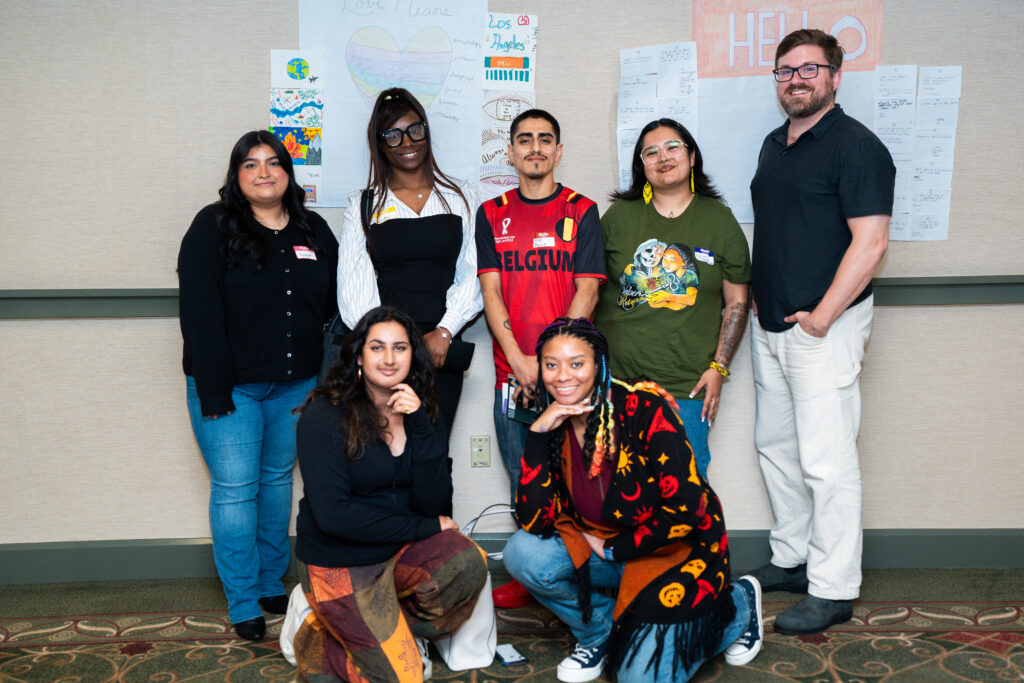
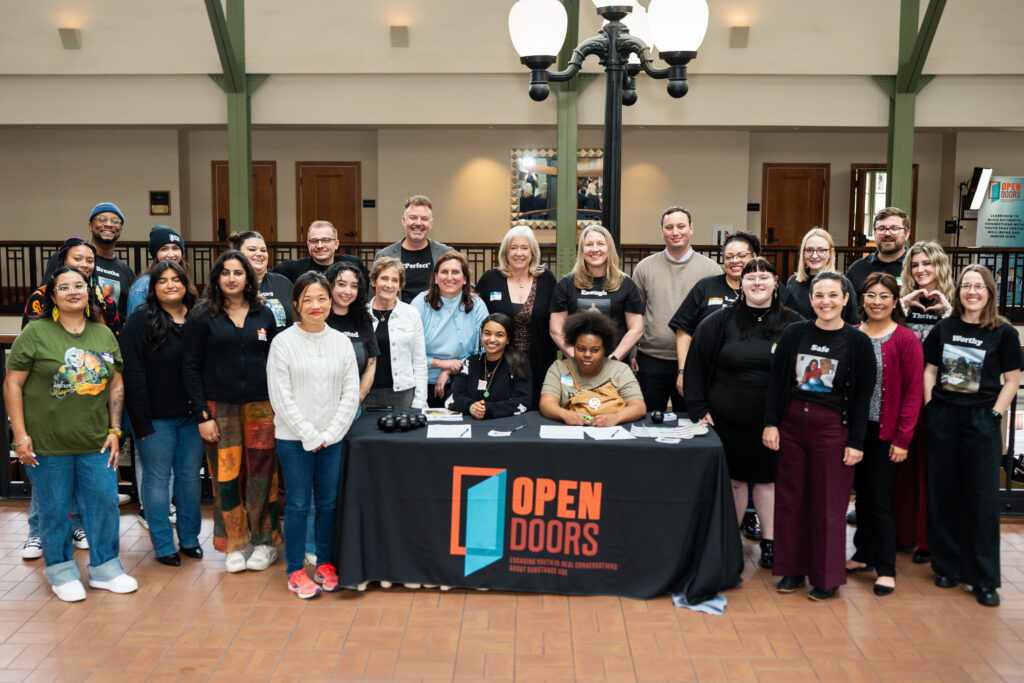
Instead of stopping at a single focus group, the team built a sustained partnership: a Youth Council.
Comprised of young people ages 16 to 26 from across California — rural and urban, Northern and Southern — the council brings together individuals with diverse lived experiences, including substance use, mental health challenges, foster care, juvenile justice involvement, and educational systems.
The council meets monthly and has played an active role in shaping the curriculum throughout its development. Their feedback led directly to concrete changes, including the creation of “Youth Notes,” callouts embedded throughout the training that highlight what young people most want adult participants to remember.
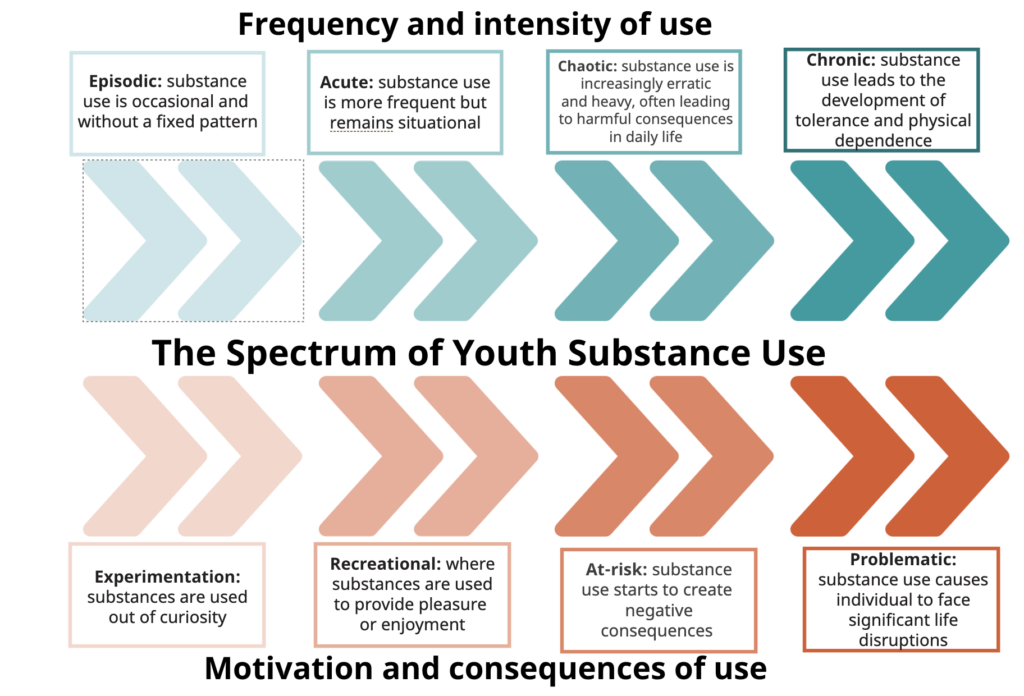
One of the most significant revisions came when young people reviewed how the curriculum presented the spectrum of substance use.
An earlier version felt too linear. Too black and white. “They felt it didn’t allow a lot of flexibility,” Tia explains.
In response, the team redesigned the visual to better reflect the complexity and fluidity of youth experiences. The updated framework explicitly cautions against labeling young people.
Youth also reshaped how the training addresses cultural humility. What could have remained abstract and systems-focused became grounded in lived experience.
“They did a really nice job of bringing it down to the individual level,” Tia says, “sharing examples from their own experience of where cultural humility would have been helpful.”
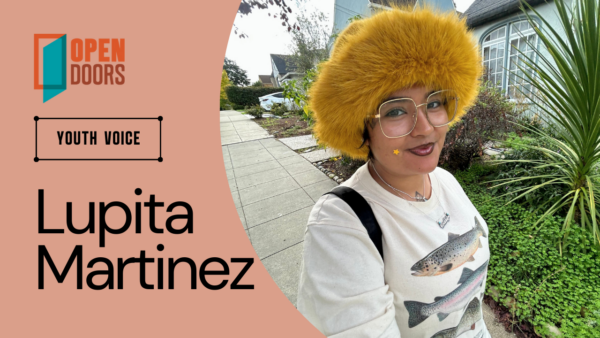
For Coatlupe “Lupita” Martinez (they/she), a Youth Council member whose own journey has included navigating behavioral health systems, that level of influence mattered deeply:
“We were able to take the training ourselves and give really thorough feedback to transform the process. It was grounding for me to have our perspectives uplifted in this way.”
— Lupita Martinez, Youth Council Member
Youth as Co-Facilitators
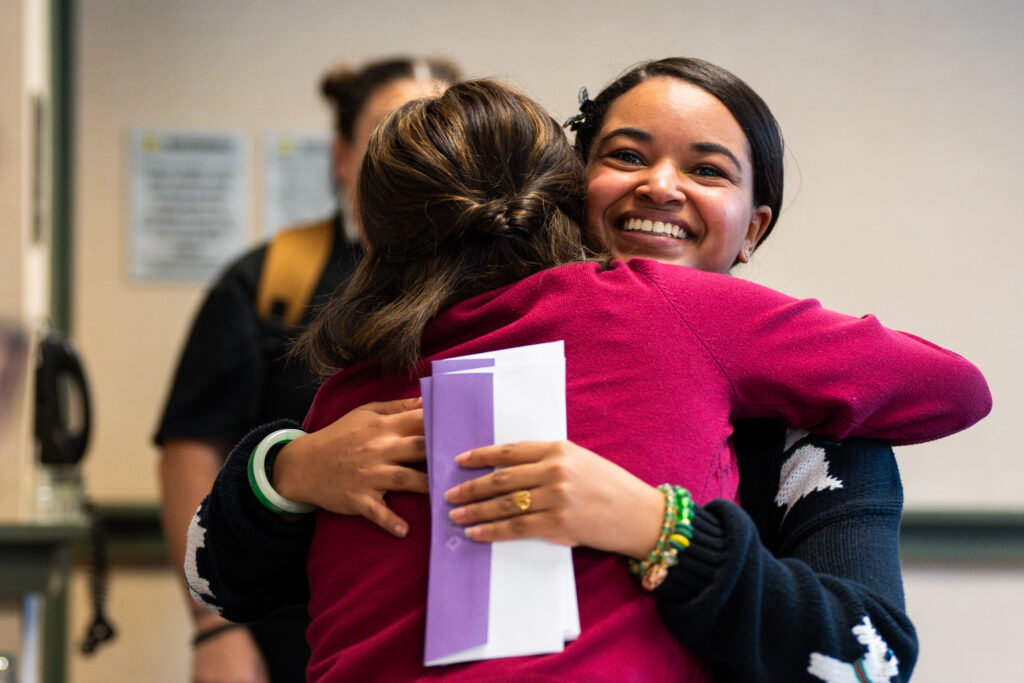
Perhaps the clearest expression of Open Doors’ commitment to youth voice is the Facilitators-in-Training (FiT) program.
FiTs are young people ages 18 to 26, many with lived experience related to substance use, mental health, or youth-serving systems — who are learning to co-facilitate Open Doors trainings alongside lead facilitators.
The 18-month program includes monthly skills labs covering presentation techniques, emotional regulation, navigating challenging moments, and more. FiTs begin by observing trainings, then gradually co-facilitate sections as their confidence grows.
The impact in the room is noticeable.
“Whenever we do have youth facilitators, our feedback always includes comments on how helpful it was,” says Tia.
When young facilitators are present, adult participants can ask questions directly and hear firsthand what it feels like to receive, or not receive, support from adults. The conversation shifts. It becomes more grounded and more accountable.
Not everyone was immediately on board.
“When we very first started, there was a lot of pushback. Some folks said, ‘you can’t bring youth into that situation; it’s not safe for them,’” Tia recalls.
The concern came entirely from adults. Not a single youth believed it was a bad idea.
The team chose to trust young people while providing structure, preparation, and support, and respecting their autonomy. The result has been a stronger, more authentic training experience.
Youth Voice is Ongoing, Not Finished
With the core curriculum now implemented across California, the Youth Council’s role continues to evolve.
Members are now helping design booster courses, starting with a module on how to meaningfully engage youth in initiatives like Open Doors. They’re also contributing ideas for outreach and social media to ensure that the program’s public-facing voice reflects young people’s perspectives.
As the training is refined based on community feedback, youth remain involved in reviewing updates.
“What we don’t want to happen is for the training to get further and further from our youth’s voice,” Tia says.
There are even larger ambitions ahead: developing a peer-to-peer version of the training built by youth, for youth.
Walking the Walk
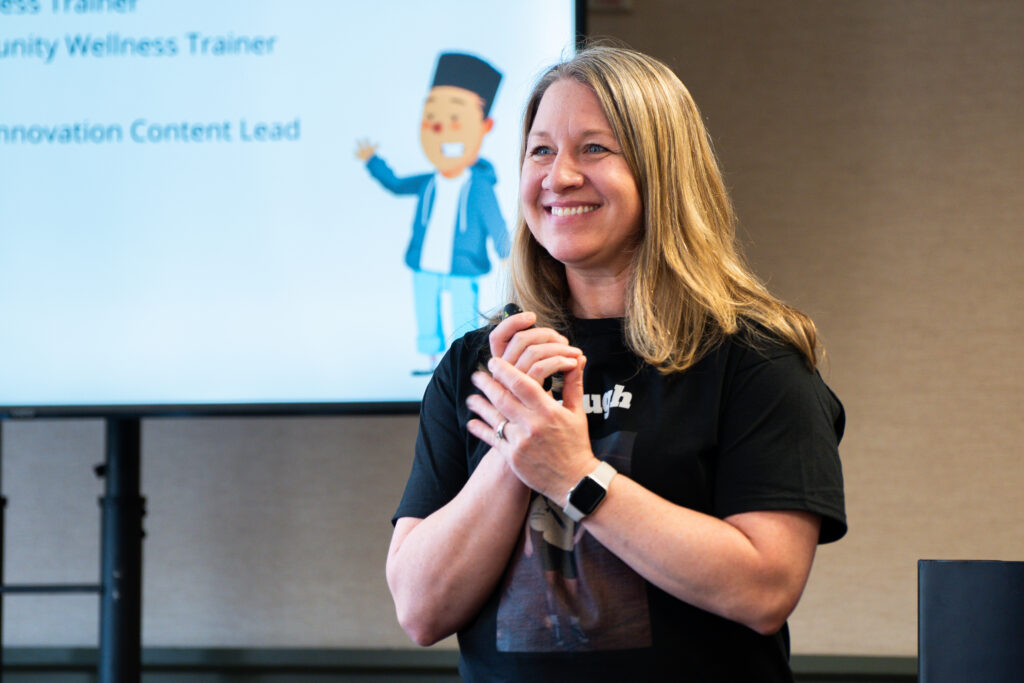
Tia Cochran-Otis, Curriculum Development Lead for Open Doors Training
For Tia, youth involvement isn’t about optics. It’s about effectiveness.
“They know what their needs are better than anyone else,” she says. “When given the space to share their experiences, we can make the most relevant training that’s actually going to accomplish the mission.”
That mission, to ensure young people have access to adults who know how to support them, is now being carried forward by the youth themselves.
In a field that too often positions young people as subjects rather than partners, Open Doors is choosing something different: collaboration, trust, and shared leadership.
“Adults need to understand that we’re all experts in our own lives. You can read textbooks and get certified, but if you haven’t lived it, you don’t fully understand it.”
— Lupita Martinez, Open Doors Youth Council Member