Building the Next Generation of Open Doors Facilitators
posted on: May 5, 2026
category: News
Inside Our First Train-the-Trainer Cohort
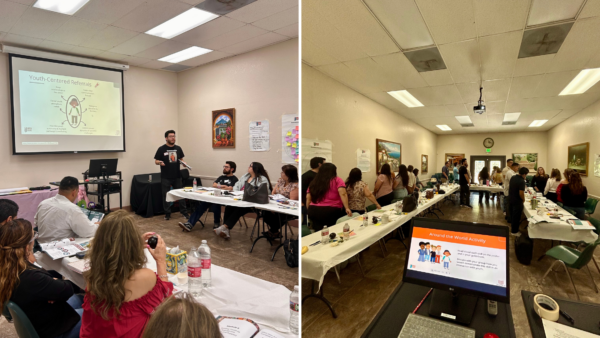
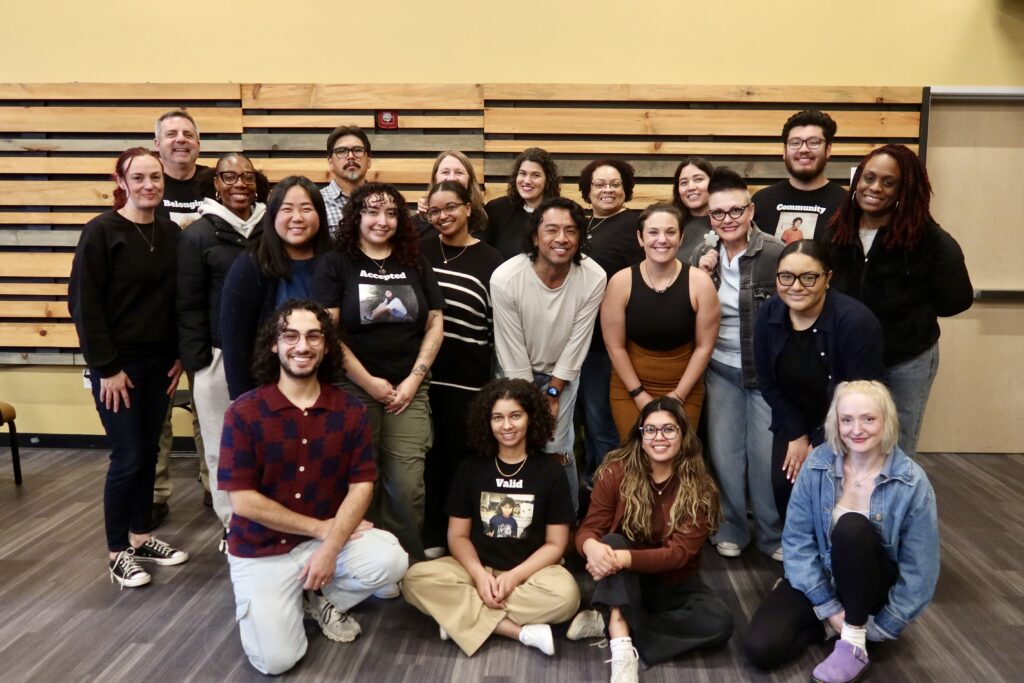
This past April in Sacramento, a new program came to life: Open Doors hosted its very first Train-the-Trainer (TtT) cohort, bringing together youth-serving professionals ready to take the next step: not just participating in the Open Doors Core Training, but learning how to facilitate it for others.
Over two days, this group stepped into a different kind of learning experience. They went beyond content and into practice, reflection, and growth.
From Participant to Facilitator
The journey into TtT begins with the Core Training. That foundational experience introduces youth-serving adults to the Open Doors approach: relationship-centered engagement, harm reduction, restorative justice, and cultural humility.
Train-the-Trainer builds on that foundation but shifts the perspective.
As Open Doors Senior Facilitator James Freeman explains:
“A lot of people come out of a core training thinking, ‘This is great. I feel more equipped, and I want to share it with others.’ Train-the-Trainer gives you the framework for how to actually do that.”
Participants don’t just revisit the material; they go deeper. They explore where the curriculum comes from, why it’s designed the way it is, and how to guide others through it.
Learning the “What” & the “Why”
One of the biggest differences between Core Training and Train-the-Trainer is what happens behind the scenes.
In a Core Training, participants experience activities such as Restorative Justice Circles and guided discussions. In TtT, the “why” behind these activities is unpacked.
Why a circle? Why a talking piece? Why this sequence of activities?
“It’s not scripted,” James explains. “We didn’t want something where someone just reads off a page. Adults can’t give youth what they haven’t experienced. So we make sure people feel it first, then learn how to facilitate it.”
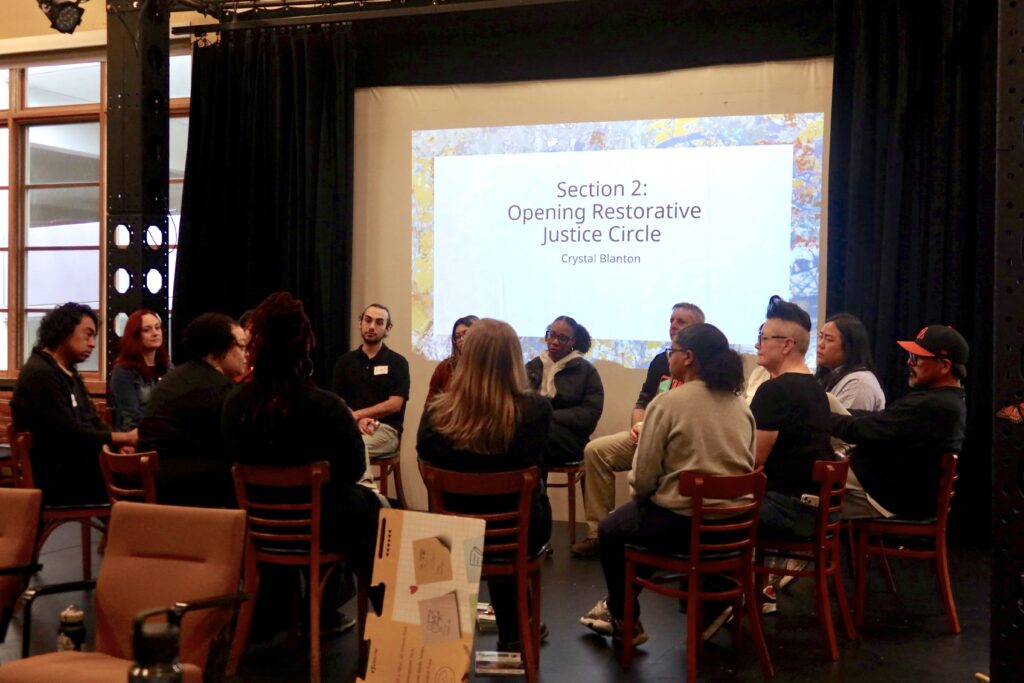
Essentially, participants aren’t just learning steps; they’re learning intention.
They explore how hospitality connects to harm reduction, how relationship-building connects to restorative justice, and how curiosity connects to cultural humility. And importantly, they learn how to model those values rather than just talking about them.
Practice, Feedback, and Real Growth
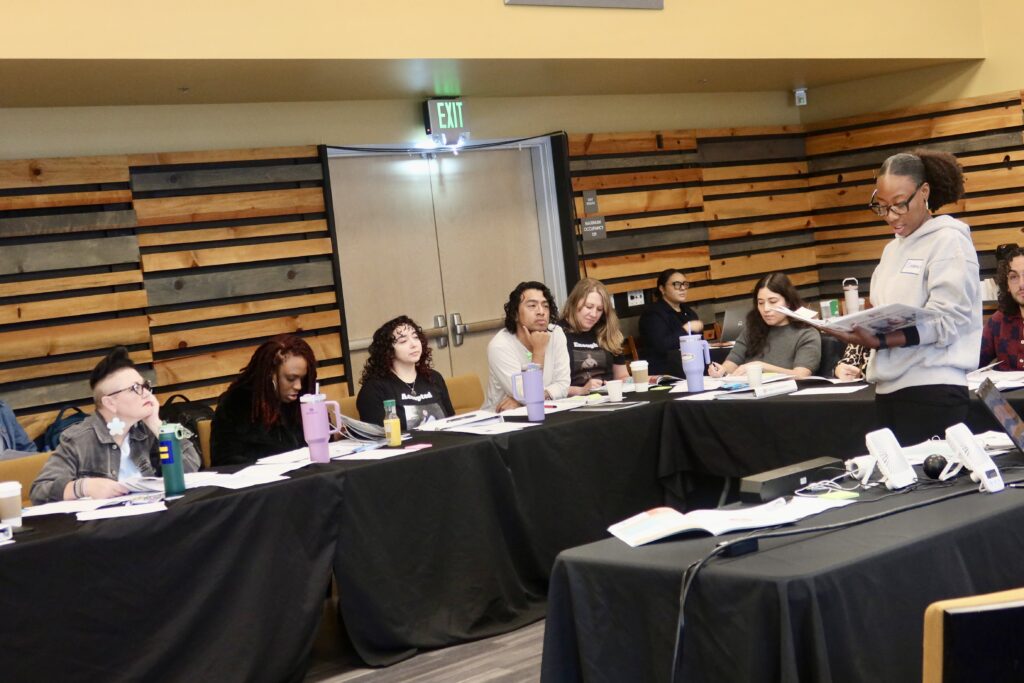
The most transformative moments often come on day two: Participants are paired up and asked to facilitate a portion of the curriculum themselves for the first time.
It’s a moment that can bring up nerves, self-doubt, and a lot of internal dialogue. But it’s also where confidence begins to shift.
“You can see people go from a minus ten to a plus fifty,” James shared. “They think, ‘I’m not going to be good at this,’ and then they do really well. And suddenly it’s like, ‘I could do this.’”

Each facilitation is followed by structured, specific feedback from peers. This highlights strengths that participants often don’t see in themselves.
And what becomes clear quickly: there’s no one “right” way to facilitate.
“No facilitator looked the same,” James said. “Different styles, different strengths — and all of them worked.”
More Than a Training
While TtT is designed to prepare facilitators, many participants walk away with something broader.
Alina Sanchez, Senior Project Manager with Open Doors, joined the cohort to better understand the program from a communications perspective, but left with something more:
“I wasn’t expecting to come out ready to facilitate. In fact, I was convinced I would never facilitate a training myself. The TtT program was not only a professional development opportunity that met all of my expectations, but also an enormous personal growth opportunity. I left feeling like I could and would facilitate a training myself.”
That blend of professional and personal growth showed up across the cohort.
Rebeca Sanchez, Workforce Development Facilitator at Community Solutions, reflected on the sense of community:
“It felt like I was sharing space with a group of people who were rooting for me to succeed. The skills I learned don’t just stay within Open Doors. Facilitation is something you take with you everywhere.”
And for Sharon Nilsson, Director of Apprenticeship at the Catalyst Center, the experience connected directly to a bigger vision:
“Being part of the first cohort felt like being on the ground floor of something truly impactful. This training aligns deeply with our mission to build a behavioral health workforce rooted in connection, equity, and real-world skill building.”
Why Train Facilitators?
At its core, Train-the-Trainer is about scale — but not just in numbers.
It’s about expanding a network of people who can carry this work forward in their own communities, organizations, and systems.
“There’s a physical limit to how many people we can train ourselves,” James said. “When you build a network of facilitators, that reach becomes exponential.”
Instead of relying on external trainers, organizations can build internal capacity by embedding these practices into their day-to-day work with youth… And the ripple effect is powerful.
The Bigger Picture
If there’s one idea that sits at the heart of Open Doors, it’s this:
“If every young person had one safe adult they could talk to at their moment of greatest struggle,” James shared, “it would change everything.”
Train-the-Trainer is one way of moving toward that reality.
By equipping more adults to facilitate these conversations (and to model openness, curiosity, and care), we expand the chances that every young person has someone they can turn to.
Looking Ahead
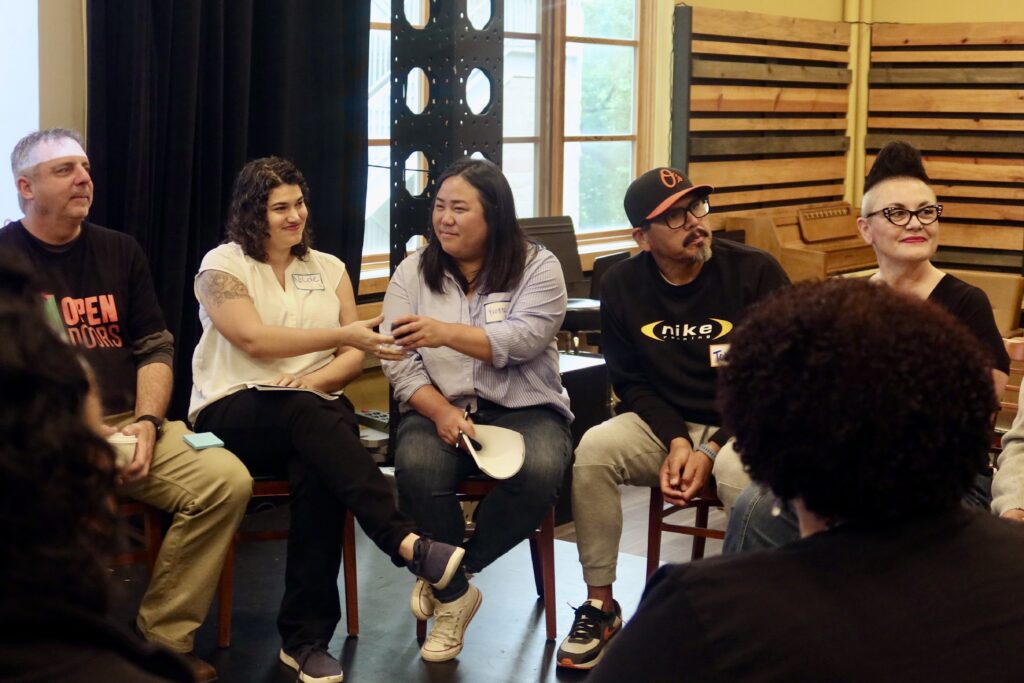
The Sacramento cohort was just the beginning.
With additional cohorts already underway across California, the Train-the-Trainer program is growing quickly and bringing together diverse professionals from schools, community organizations, behavioral health, and beyond.
And as that network grows, so does the potential for impact.
Because this work isn’t just about delivering a training; it’s about changing how adults show up for each other, and for young people.