“So, What’s With the T-Shirts?”: A Reflection on Belonging & Showing Up for Youth
posted on: July 2, 2026
category: Microlearning

Written by: James Freeman, Open Doors Senior Facilitator
At Open Doors, our work is about creating safer, more connected communities by equipping adults to engage young people with curiosity and compassion, especially when conversations involve substance use and other behavioral health challenges.
The Story Behind the T-Shirts
If you’ve participated in one of our training events, you may remember that the facilitators, including our youth Facilitators-in-Training, typically wear a very unique shirt. On each shirt is a photo of the facilitator as a young person, along with one word they needed to hear at that time in their life.
The shirts serve as a visible reminder to us and to participants of our own youthfulness. They are also an invitation for others to reflect on their own experiences as young people, with questions like:
- When was a time when you needed a trusted adult?
- What image would you choose to represent that time in your life?
- What word or message might have made a difference?
The idea is borrowed, with permission, from author and social impact consultant Jesse Leon. Jesse grew up in a Mexican immigrant family in San Diego in the 1970s. In his memoir I’m Not Broken (Vintage, 2022), he shares his experiences with street life, sex trafficking, and substance use. His story reminds us that change does not start only with policies or programs. It also starts with seeing each other as humans.
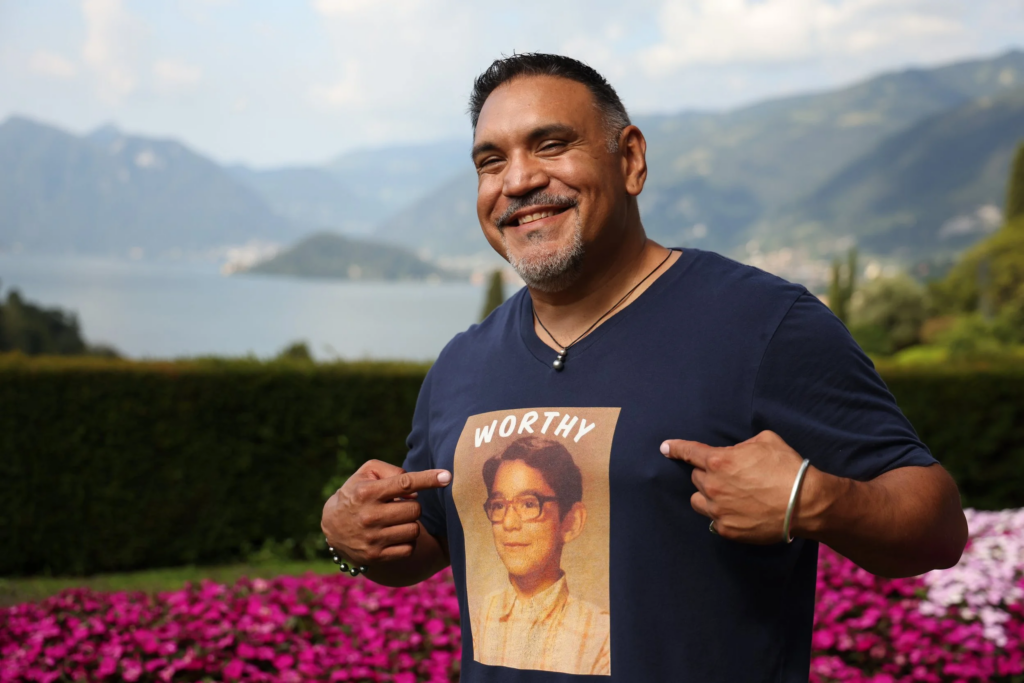
The shirts reconnect us to things that are easily lost in professional roles: memory, vulnerability, and empathy. Working well with young people requires both connecting with our inner youth and remembering what it felt like to be one.
That reflection also keeps us connected to what our Youth Council and Facilitators-in-Training remind us often: young people move through systems shaped by inequity, bias, and policies that can make it harder for them to feel safe, connected, or believed.
That’s why our focus on relational practice is so important. It does not replace the need for structural change, but it reminds us that every system is carried out by people, and how we show up matters.
Why Our Stories Matter
One thing I’ve experienced and seen in others is that when we work alongside people who have faced profound trauma and adversity, many of us feel an internal pull to compare and minimize our own stories. We tell ourselves that our experiences don’t belong in the same room.
But our experiences do not need to compete to be real. Looking honestly at our own stories does not diminish the reality of anyone else’s. It strengthens our capacity to be present.
When we validate our own lived experience, we can show up with more self-awareness and empathy. Our stories are all different in shape, depth, and context. Together, they help us form a stronger, more compassionate community. One where we do not rank pain, but recognize it.
A Moment Without Repair
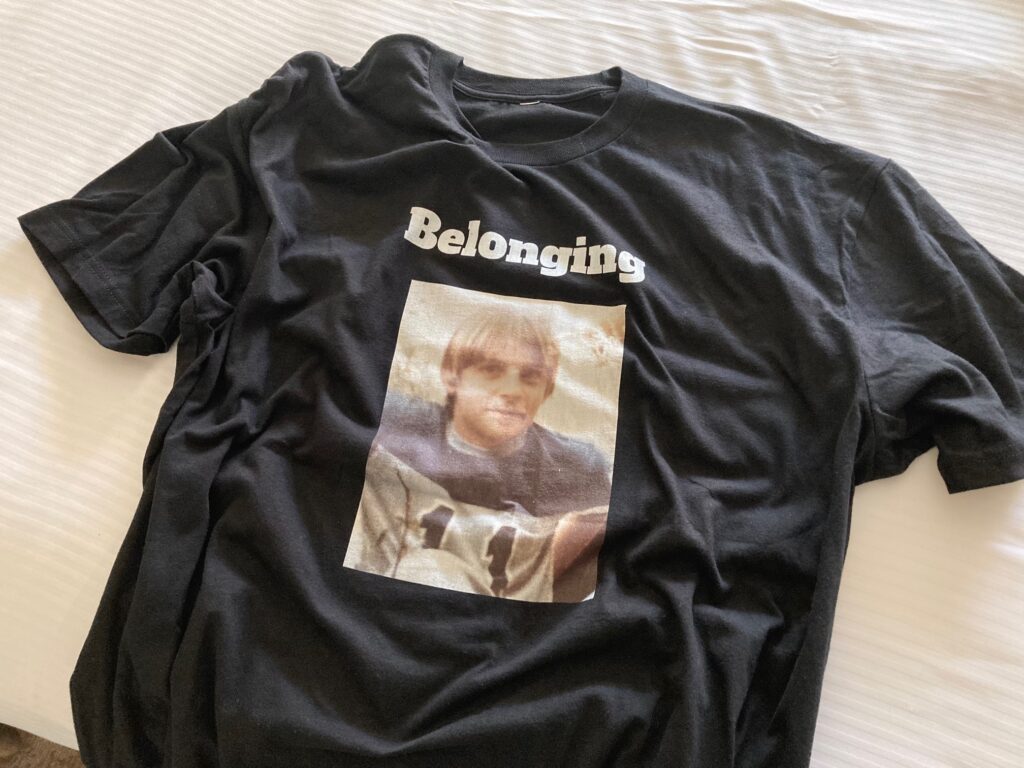
On my shirt in the picture above is the word “belonging.”
When I was growing up, my family moved several times around town. Each move was to an exciting new neighborhood. But every move also meant starting over. I was the new kid again, and eventually that feeling stuck. School became the place where I learned to see myself as an outsider.
One moment in that process occurred in the principal’s office early in elementary school. I remember sitting there while she yelled at me, so loudly I could hear her as she walked in and out of other rooms. The truth is, I didn’t even know what I had done wrong.
I remember confusion, shame, and the feeling of being small in a little chair. I remember the sound of her voice and the certainty that I didn’t belong there, or anywhere in that building.
No one slowed down to help me understand what was happening with me instead of to me. No one said, “You still belong here.” It was a rupture of the relationship without repair.
What I needed in that moment was not to be blamed or to be fixed. I needed to be seen as someone who mattered enough to be spoken with, not at. I needed a trusted adult who could have said, “You’re okay. You belong here.” I didn’t get it at the time, but the absence taught me how powerful it is.
This singular experience was not the only one for me, and it is not shared here to compare my story to anyone else’s. The point is to recognize how even small ruptures can linger, shaping a young person’s sense of safety and identity. This moment became part of the lens through which I learned to notice those ruptures in others.
Becoming the Adult We Once Needed
This lesson has stayed with me. Less now as a wound and more as a guide. I realize how much it shapes how I move through the world and how I show up with others.
I still feel echoes of that moment in small ways: I tend to step back rather than take the center, I tense at raised voices, and I shut down when correction comes without understanding.
Which is why today I try to be especially mindful in moments when a young person is having a hard time. Those are often the times when they most need to hear, through our tone, our presence, and our response, “You still belong.”
I try to be the person who offers grounding instead of judgment, clarity instead of confusion, and connection instead of distance.
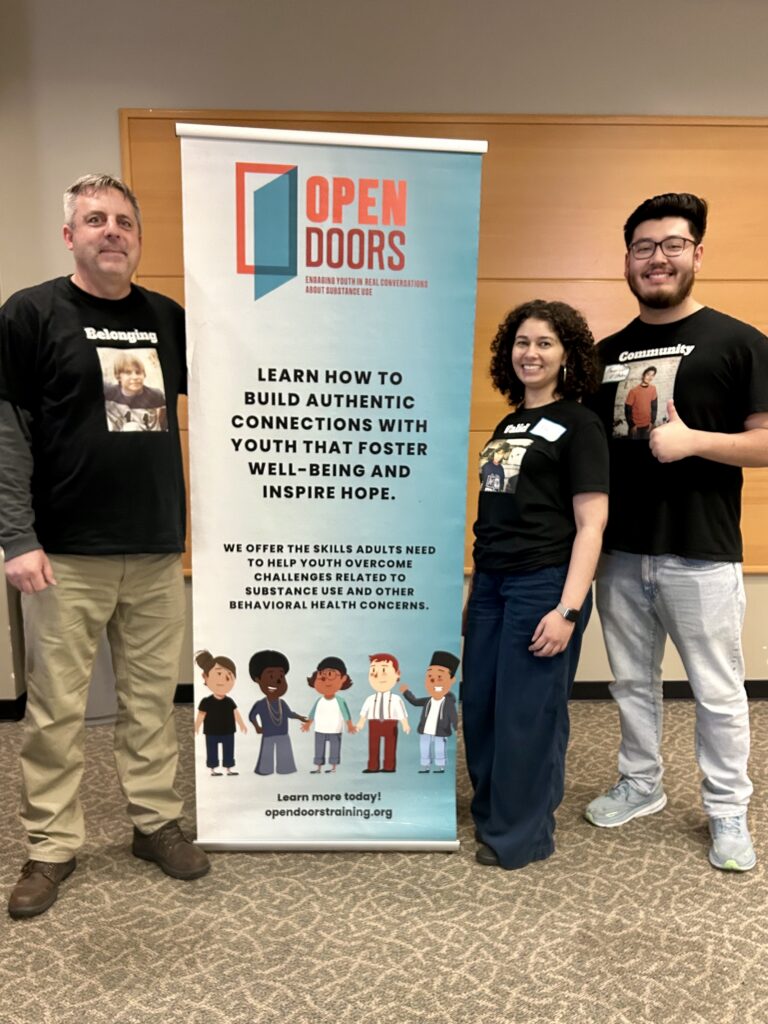
My aim is to create spaces where people feel safe and know they belong before they are asked to prove anything. Because when a young person is already feeling like an outsider, how we respond matters far more than whatever happened.
In practice, this often looks simple: slowing down before responding, checking our tone, offering a moment of clarity when things feel chaotic, or naming what is happening so a young person is not left alone with confusion. These small moves begin to create the conditions where trust can grow.
Because belonging is not something youth earn after they get it right. It is part of the conditions that make growth possible in the first place.
In our work with young people, we are often standing in for the adults we once needed ourselves. The words we choose, the tone we carry, and the way we respond in moments of uncertainty can either reinforce painful exclusion or quietly open a door of possibility.
Sometimes the most important thing we offer a young person isn’t a strategy or a solution. It is the experience of being seen. And sometimes, the right word at the right moment can stay with someone for a lifetime.