Youth Voice: Axel Pecero on Rebuilding, Belonging, & Life After Deportation
posted on: November 4, 2026
category: Youth Voices
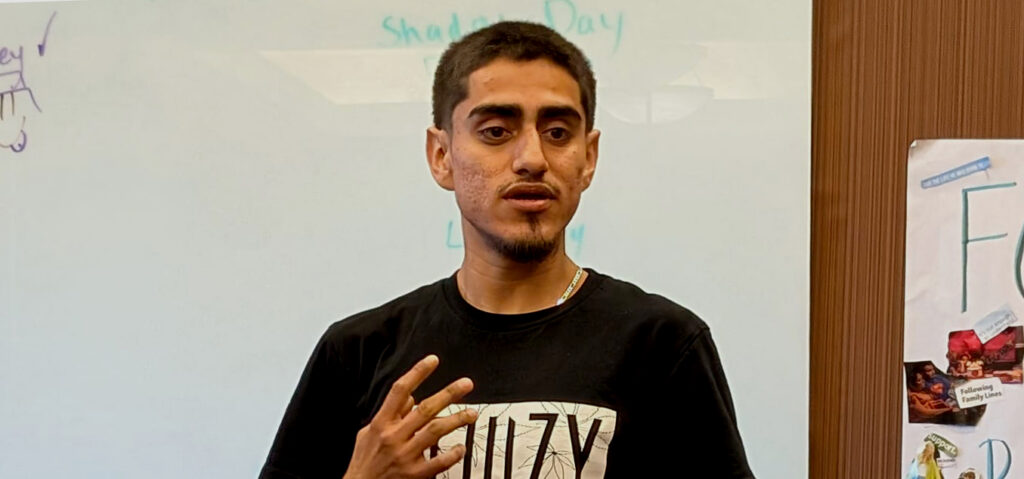
After returning to Mexico earlier this year, Open Doors Youth Council member Axel Pecero reflects on reconnecting with family, navigating a new identity, and his hopes of reuniting with his son.
For years, Axel Pecero has been a passionate advocate for young people, drawing on his lived experience in the foster care system to champion youth voices and create opportunities.
As a member of the Open Doors Youth Council, Axel has helped advance our mission of centering young people’s experiences and perspectives. But in August 2025, his life took an unexpected turn when he was detained by U.S. Immigration and Customs Enforcement (ICE) while attending an Open Doors training and Youth Council meeting in Burbank, California.
Following nearly eight months in detention, Axel made the difficult decision to voluntarily leave the United States in March 2026, hoping to preserve a path toward eventually reuniting with his young son, AJ, in Los Angeles.
Now living in Cancún, Mexico, Axel is navigating a life that looks very different from the one he knew. He has reunited with his mother and siblings after 18 years apart, started a new job, and begun rebuilding his life. Yet these new opportunities come alongside significant challenges, including the emotional toll of being separated from his son and the uncertainty surrounding his future.
As LAist reported earlier this year, Axel’s experience reflects the profound impact immigration detention and family separation can have on parents, children, and their communities.
We previously shared Axel’s story while he was in detention. Today, we’re grateful to reconnect with him and share an update in his own words.
In this conversation, Axel reflects on what it means to start over, the importance of family and community, and why he hopes more people will recognize the human experiences behind stories of deportation.
A CONVERSATION WITH AXEL PECERO

1. How has your life changed since leaving the United States, and what has that adjustment been like for you?
Axel: Well, the vague answer is that my life has completely changed. The best comparison I can think of is that it’s like changing main characters in a video game or movie.
The Axel before deportation is long gone, and I only get small glimpses of him through old photos and distant memories. I remember my old life with my son, my brother, my ex-girlfriend, my school, my work and advocacy, and my friends. I also remember my passion for music and LA culture. All these things made up who I was.
Now, this new version of me is growing in different ways. For example, I’ve rebuilt my relationship with my mom and my brothers and sisters, whom I hadn’t seen in 18 years. That has been the highlight of my experience here in Mexico.
The first few months were tough because I felt out of place, like a freshwater fish stuck in the ocean, fighting to survive physically and mentally.
I’ve adapted, but the scars of that battle still show. For example, I don’t feel as empowered here in Mexico as I did in the States. I used to feel like no challenge was too big for me to push through, but here I don’t feel that way.
From what I’ve seen so far, there is a strong working class facing low-paying jobs and a lack of opportunities.
I’ve also lost my sense of identity here. The other day, I went shopping for clothes, but I didn’t even know who I was anymore or what style I liked. I think that connects to not having fully adjusted yet.
2. What has helped you find strength or hope during this transition?
Axel: My strength comes directly from my mom and my brothers and sisters. They’ve made this transition easier through their love and support.
I’ve allowed myself to receive their love and learn from my mom. She has shown me what it means to be a parent. I’m learning everything I can from her so that when I return to my son, AJ, I’ll be a better father to him.
That’s been my motivation to get through this tough situation. I’m learning everything I can so I can return as a better person for my son.
My friends back in the States have also helped me find strength. They’ve been there for me, even before my deportation. All their love and support have really helped me physically and mentally.
3. What does home mean to you now?
Axel: Home for me is, and always will be, Los Angeles.
I see this as a temporary life-learning experience, so when the time comes, I’ll return to my home in Los Angeles. At least that’s how I feel about it right now.
I’m aware that if I establish roots too deeply here, it could change everything. So, for now, I’m keeping things more temporary because I want to return to Los Angeles.
4. What are you looking forward to most as you move forward with your life?
Axel: My main priorities are seeing my son, establishing myself financially, and fixing my immigration status.
All three go hand in hand. For example, I need to build a strong financial foundation to pay for whatever it costs to fix my status. I also need to fix my status so I can return to my son in the States.
Currently, I’m working as a timeshare promoter for a five-diamond hotel called Garza Blanca, and I’m working hard to make this opportunity work out for me.
5. What do you wish people understood about life after deportation that they might not hear in the news?
Axel: Since I work with a lot of tourists in Cancún, when I tell them I’ve been deported from the USA, many are surprised and say, “I’ve heard about deportations on social media, but I’ve never met someone in real life.”
Well, the cold truth is that there are a lot of us who have been deported. We all have different backgrounds and different stories, but we all have to adapt, rebuild, and try to make the best of the situation.
It’s not easy. We suffer from identity loss and trauma. It isn’t easy to adapt to a new country after living in another country almost your entire life.
Depression is constantly knocking at the door, and trying to push past it is a task every day.
The pain of being separated from my son makes everything harder, especially because he’s too young for me to explain why I’m not there with him.
I wish people who support deportations could understand that it’s not just about keeping the border safe. It’s about families being torn apart, people suffering heavy losses, and a lifetime of trauma.
If people could show a little more compassion, that would really help.
Looking Ahead
Axel’s journey is still unfolding. While reconnecting with family and finding work in Mexico have brought new opportunities, he continues to navigate the challenges of displacement, separation, and rebuilding his sense of belonging.
His story reminds us that resilience doesn’t mean the absence of hardship. Young people and young adults navigating complex circumstances deserve more than recognition for their strength. They deserve compassion, meaningful support, and opportunities to shape their own futures.
At Open Doors, we believe in listening to young people, honoring their lived experiences, and creating spaces where their voices can be heard.
We’re grateful to Axel for sharing his story so openly and for continuing to advocate for himself, his family, and others whose experiences too often go unheard.